La Corte Suprema de EE.UU. anula decreto de Trump que buscaba limitar la ciudadanía por nacimiento
(LPL) – La Corte Suprema de Estados Unidos emitió este martes un fallo histórico al anular el decreto del
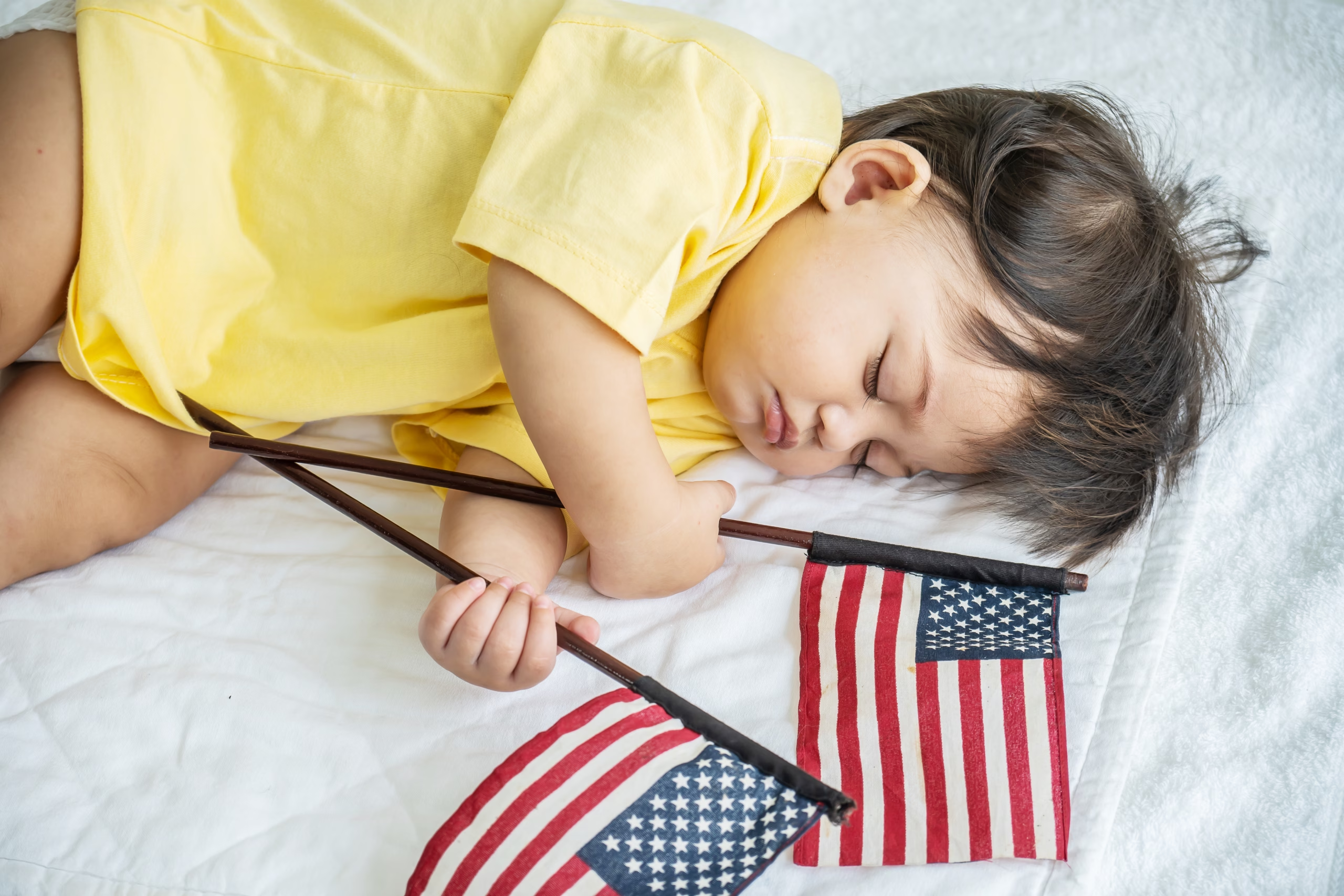
(LPL) – La Corte Suprema de Estados Unidos emitió este martes un fallo histórico al anular el decreto del expresidente Donald Trump que buscaba restringir la ciudadanía por nacimiento, reafirmando así uno de los principios constitucionales más antiguos del país.
La decisión representa un duro golpe a la agenda migratoria de Trump y confirma la vigencia de la Decimocuarta Enmienda de la Constitución, que establece que toda persona nacida en territorio estadounidense es ciudadana del país, sin importar el estatus migratorio de sus padres.
El decreto, firmado por Trump al inicio de su segundo mandato en 2025, pretendía negar la ciudadanía automática a los hijos de inmigrantes indocumentados y personas con estatus temporal, argumentando que no estaban plenamente “sujetas a la jurisdicción” de Estados Unidos. Sin embargo, la medida generó múltiples demandas a nivel federal y fue bloqueada por tribunales inferiores desde su implementación.
En su decisión, la Corte Suprema —con una mayoría de 5-4— concluyó que la orden ejecutiva contradecía directamente el texto constitucional y precedentes históricos, incluyendo el caso Wong Kim Ark de 1898, que ya había establecido el principio de ciudadanía automática por nacimiento en suelo estadounidense.
Organizaciones de derechos civiles y estados que impugnaron la medida celebraron el fallo, calificándolo como una victoria para la Constitución y para las familias inmigrantes. Argumentaron que la eliminación de este derecho habría afectado a cientos de miles de niños cada año y creado un nuevo nivel de incertidumbre legal en el país.
Por su parte, sectores conservadores aliados a Trump criticaron la decisión, alegando que el sistema migratorio necesita reformas profundas y que el fallo limita la capacidad del poder ejecutivo para abordar la inmigración irregular.
El caso se convierte en uno de los más relevantes del año en materia constitucional y migratoria, al reafirmar que cambiar el derecho a la ciudadanía por nacimiento requeriría una enmienda constitucional y no una orden ejecutiva presidencial.
En medio de un intenso debate político nacional sobre inmigración, la decisión del alto tribunal consolida nuevamente el alcance de la Decimocuarta Enmienda como pilar del sistema de ciudadanía en Estados Unidos.
English:
U.S. Supreme Court strikes down Trump decree seeking to limit birthright citizenship
(LPL) – The United States Supreme Court issued a historic ruling on Tuesday, striking down former President Donald Trump’s decree that sought to restrict birthright citizenship, thereby reaffirming one of the country’s oldest constitutional principles.
The decision deals a major blow to Trump’s immigration agenda and upholds the validity of the Fourteenth Amendment to the Constitution, which establishes that anyone born on U.S. soil is a citizen, regardless of their parents’ immigration status.
The decree, signed by Trump at the start of his second term in 2025, aimed to deny automatic citizenship to the children of undocumented immigrants and individuals with temporary status, arguing that they were not fully «subject to the jurisdiction» of the United States. However, the measure sparked numerous federal lawsuits and was blocked by lower courts from the moment it was implemented.
In its decision, the Supreme Court—by a 5-4 majority—concluded that the executive order directly contradicted the text of the Constitution and historical precedents, including the 1898 Wong Kim Ark case, which had already established the principle of automatic birthright citizenship on U.S. soil.
Civil rights organizations and states that challenged the measure hailed the ruling as a victory for the Constitution and for immigrant families. They argued that eliminating this right would have affected hundreds of thousands of children annually and created a new level of legal uncertainty in the country.
Meanwhile, conservative allies of Trump criticized the decision, claiming that the immigration system requires sweeping reforms and that the ruling limits the executive branch’s ability to address irregular immigration.
The case stands as one of the year’s most significant regarding constitutional and immigration law, reaffirming that altering the right to birthright citizenship would require a constitutional amendment rather than a presidential executive order. Amidst an intense national political debate over immigration, the high court’s decision once again reinforces the scope of the Fourteenth Amendment as a pillar of the U.S. citizenship system.