Nathalie Quintero, la ingeniera venezolana detrás de la nueva conquista de la Luna
(LPL) – La historia de la venezolana Nathalie Quintero volvió a cobrar relevancia ayer, tras el lanzamiento de la
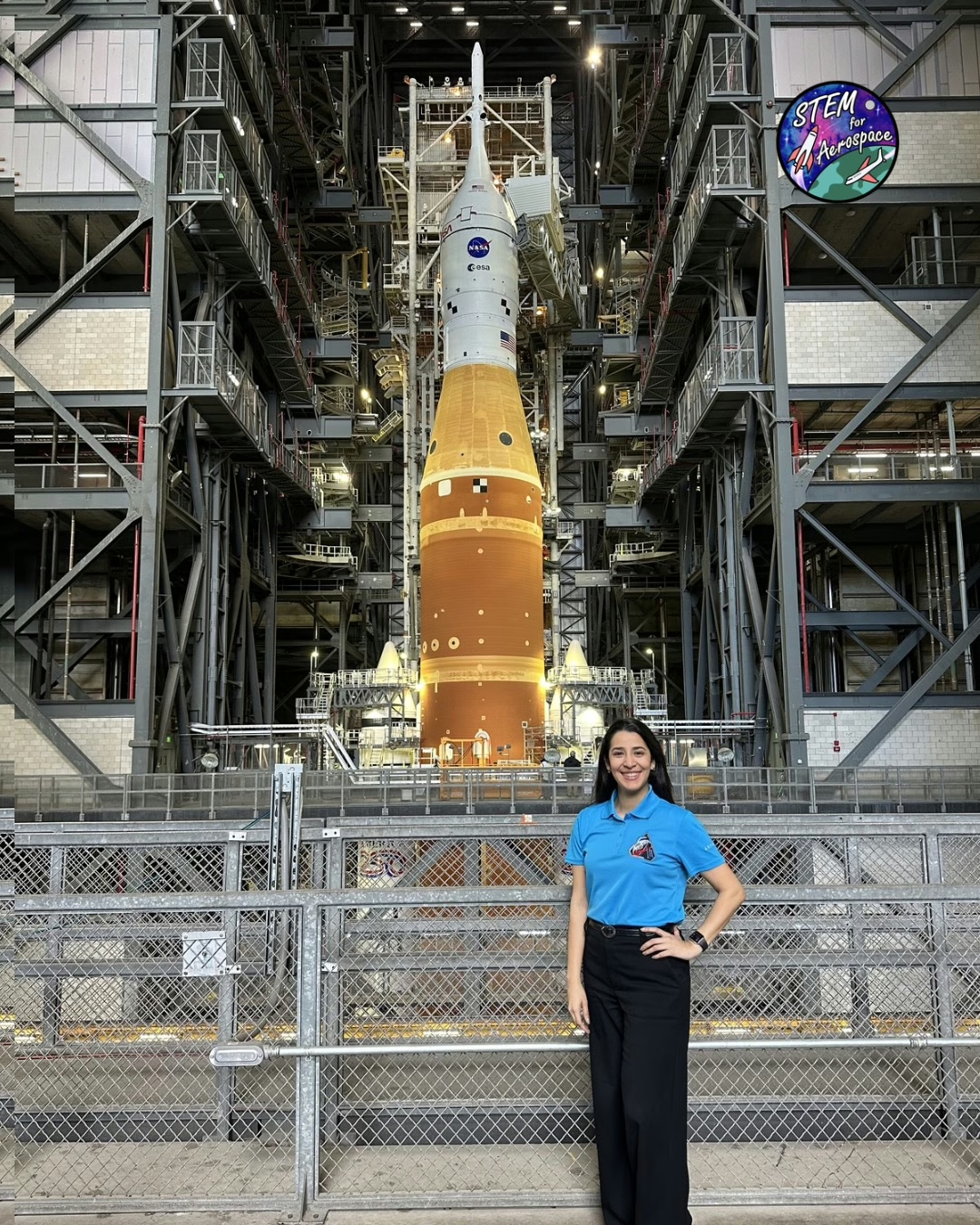
(LPL) – La historia de la venezolana Nathalie Quintero volvió a cobrar relevancia ayer, tras el lanzamiento de la misión Artemis II, un paso clave en el regreso de la humanidad a la Luna.
Detrás de ese histórico despegue, realizado con el poderoso cohete Space Launch System (SLS), hay años de trabajo técnico, pruebas y liderazgo en los que Quintero ha sido protagonista. Como ingeniera de sistemas en Boeing, la venezolana ha desempeñado un rol crucial en las operaciones y pruebas del núcleo central del cohete, considerado el “corazón” del SLS.
Ese núcleo es la estructura que concentra los tanques de combustible y los motores principales que impulsan la nave fuera de la Tierra. El éxito del lanzamiento depende en gran medida de que cada componente funcione con precisión milimétrica, y ahí es donde entra el trabajo de Quintero: supervisar, validar y coordinar sistemas críticos antes del despegue.
Su participación no se limita a una sola misión. Quintero ha sido parte del desarrollo continuo del programa Artemis, que busca establecer una presencia humana sostenible en la Luna y preparar el camino hacia Marte. En el caso de Artemis II, la primera misión tripulada del programa en más de 50 años alrededor de la Luna, el cohete SLS, en cuya ingeniería ella ha trabajado, fue esencial para enviar a los astronautas en un viaje de aproximadamente 10 días en órbita lunar.
Pero más allá de lo técnico, su historia tiene un peso simbólico enorme. Nacida en Caracas, Venezuela, Quintero creció inspirada por su padre, piloto militar, quien despertó en ella la pasión por la aviación. A los 17 años emigró a Estados Unidos para estudiar ingeniería aeroespacial, enfrentando no solo la distancia de su familia, sino también las barreras del idioma y la adaptación cultural.
Ese esfuerzo la llevó a graduarse en Embry-Riddle Aeronautical University y posteriormente especializarse en ingeniería de sistemas en Cornell University. Con disciplina y talento, logró abrirse camino en la industria aeroespacial hasta integrarse a Boeing, donde hoy desempeña un papel fundamental.
Orgullosa de sus raíces, también impulsa la iniciativa “STEM for Aerospace”, con la que motiva a jóvenes latinos a seguir carreras en ciencia e ingeniería.
En cada lanzamiento, Nathalie Quintero no solo ayuda a impulsar un cohete hacia el espacio. También eleva el nombre de Venezuela y de toda la comunidad hispana, demostrando que el talento latino también está escribiendo el futuro de la exploración espacial.
Su historia no es solo la de una ingeniera en la NASA; es la de una latina que rompió fronteras, llevando consigo su cultura, su idioma y su identidad hasta uno de los proyectos más ambiciosos de la humanidad.
“Poder tener el privilegio de ser parte de esta misión es un honor. Una misión que representa verdaderamente el poder de unidad y perseverancia a los retos que se presentan en esta industria espacial. Nunca me olvidaré de este día, y de todo el esfuerzo que representa un equipo para que se den las cosas. Godspeed Artemis II, próxima parada: La Luna. Y sí, esta misión también se escribe con sabor a arepa. Orgullosa de dónde vengo y hacia dónde voy”, escribió la venezolana en sus redes sociales luego del despegue de la nave.
Porque para Nathalie Quintero, el cielo nunca fue el límite… solo el comienzo.
English:
Nathalie Quintero: The Venezuelan Engineer Behind the New Conquest of the Moon
(LPL) – The story of Venezuelan engineer Nathalie Quintero regained prominence yesterday following the launch of the Artemis II mission—a key step in humanity’s return to the Moon.
Behind that historic liftoff, carried out using the powerful Space Launch System (SLS) rocket, lie years of technical work, testing, and leadership in which Quintero has played a leading role. As a systems engineer at Boeing, the Venezuelan native has played a crucial part in the operations and testing of the rocket’s core stage—considered the «heart» of the SLS.
This core stage is the structure housing the fuel tanks and main engines that propel the spacecraft away from Earth. The success of the launch depends largely on every component functioning with millimeter-perfect precision; this is where Quintero’s work comes in: supervising, validating, and coordinating critical systems prior to liftoff.
Her involvement is not limited to a single mission. Quintero has been part of the ongoing development of the Artemis program, which seeks to establish a sustainable human presence on the Moon and pave the way for future missions to Mars. In the case of Artemis II—the program’s first crewed mission to orbit the Moon in over 50 years—the SLS rocket (on whose engineering she worked) was essential for sending astronauts on a journey of approximately 10 days in lunar orbit.
Yet, beyond the technical aspects, her story carries immense symbolic weight. Born in Caracas, Venezuela, Quintero grew up inspired by her father—a military pilot—who ignited her passion for aviation. At age 17, she emigrated to the United States to study aerospace engineering, facing not only the separation from her family but also language barriers and the challenges of cultural adaptation.
That dedication led her to graduate from Embry-Riddle Aeronautical University and subsequently specialize in systems engineering at Cornell University. Through discipline and talent, she successfully forged a path for herself within the aerospace industry, eventually joining Boeing, where she plays a pivotal role today. Proud of her roots, she also champions the “STEM for Aerospace” initiative, through which she encourages young Latinos to pursue careers in science and engineering.
With every launch, Nathalie Quintero does more than just help propel a rocket into space. She also elevates the name of Venezuela—and the entire Hispanic community—demonstrating that Latino talent is, indeed, helping to write the future of space exploration.
Her story is not merely that of a NASA engineer; it is the story of a Latina who broke down barriers, carrying her culture, her language, and her identity with her to one of humanity’s most ambitious endeavors.
“To have the privilege of being part of this mission is an honor—a mission that truly embodies the power of unity and perseverance in the face of the challenges inherent to the space industry. I will never forget this day, nor the immense effort a team puts forth to make things happen. Godspeed, Artemis II; next stop: the Moon. And yes, this mission is also written with the flavor of an arepa. Proud of where I come from, and of where I am headed,” the Venezuelan engineer wrote on social media following the spacecraft’s liftoff.
For to Nathalie Quintero, the sky was never the limit… it was only the beginning.