Papa León XIV aterriza en Uruguay para iniciar gira por Sudamérica
(LPL/AP) – El papa León XIV llegó a Uruguay el viernes para dar inicio a una gira sudamericana de
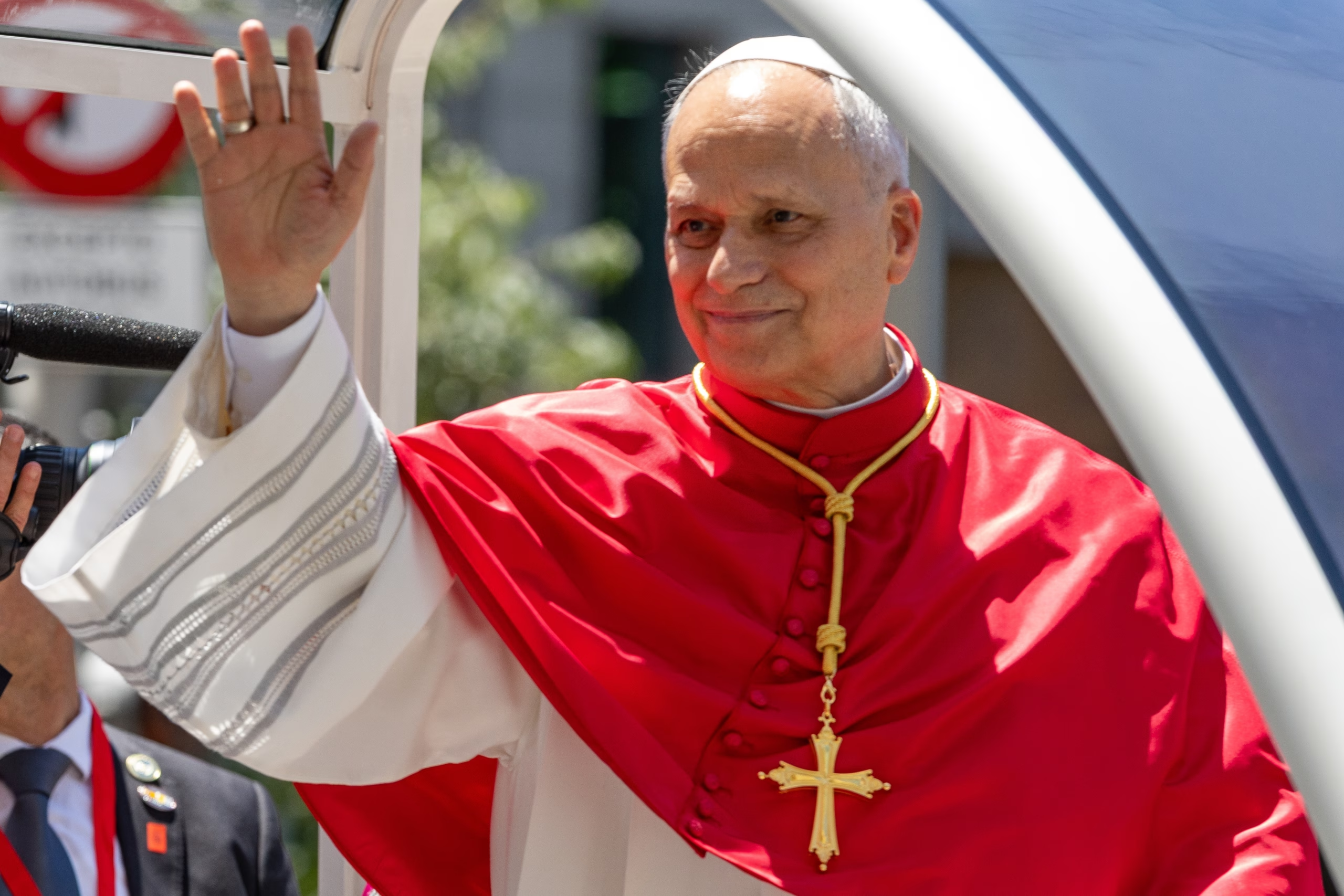
(LPL/AP) – El papa León XIV llegó a Uruguay el viernes para dar inicio a una gira sudamericana de tres países, menos de un mes después de una cirugía de pulmón y ocho años después de la última visita de un pontífice al continente.
Con el presidente uruguayo Yamandú Orsi presente en el Aeropuerto Internacional de Carrasco para darle la bienvenida, el pontífice aterrizó en Montevideo tras casi 14 horas de vuelo desde Roma. Se trata de la primera visita papal en casi cuatro décadas a Uruguay, el país más secular de América Latina; el último pontífice en visitarlo fue Juan Pablo II en 1988.
Después de Uruguay, León XIV viajará a Argentina, la patria del fallecido papa Francisco, que nunca la visitó durante sus 12 años de papado. Su última parada es Perú, país del cual León XIV tiene ciudadanía y donde pasó dos décadas como misionero y obispo.
El apretado itinerario de tres días en Uruguay incluye una visita a un barrio azotado por la violencia de pandillas, una misa en Paysandú, a unos 375 kilómetros (230 millas) de la capital, y otra misa en la ciudad de Florida, a unos 100 kilómetros (60 millas) de Montevideo.
El ambiente en el aeropuerto antes de la llegada de León XIV era tranquilo y sin prisas, muy parecido al resto de la capital uruguaya. Poco a poco, sin embargo, la gente comenzó a reunirse en la Plaza Independencia, uno de los espacios públicos más emblemáticos del país y el lugar del primer acto público de León XIV.
La “resistencia” del papa es fantástica
El tramo uruguayo es la primera parada de lo que será el viaje más largo y más lejano de su pontificado, todo ello al tiempo que el papa de 71 años continúa su recuperación. El viaje también lo llevará a la vecina Argentina y finalmente de regreso a casa, a Perú, donde León XIV sirvió como sacerdote misionero y obispo durante dos décadas.
“Su resistencia es fantástica. La manera en que está cantando es increíble. Y solo se puede cantar si los pulmones están realmente fuertes”, afirmó María Montserrat Alvarado, la nueva jefa de comunicación del Vaticano. Señaló que León ya superó el periodo de convalecencia de 14 días exigido por los médicos tras su operación del 13 de octubre y que está ansioso por salir de viaje.
“Sus médicos son muy optimistas y tendrá toda la atención médica a bordo si ocurriera algo, pero no vemos indicios de ello ni en su pronóstico ni siquiera en la manera en que se está comportando”, añadió.
Primera parada en el Uruguay secular
En Uruguay, que no ha tenido una visita papal desde 1988, se espera que León XIV intente recordar a los 3,5 millones de personas su fuerte herencia católica proveniente de los tiempos del dominio colonial español. Es probable que proponga de nuevo la fe como respuesta a los desafíos y problemas de hoy.
León XIV se reunirá con Orsi, líder de la alianza de centroizquierda que asumió el poder en marzo de 2025, y luego pronunciará su discurso de bienvenida ante funcionarios del gobierno y diplomáticos. Termina la larga jornada con un servicio de vísperas en la catedral de la ciudad.
León XIV encontrará en Uruguay un país distinto a cualquier otro en América Latina, que alberga alrededor del 40% de los 1.400 millones de católicos del mundo. Uruguay es considerado el país más secular de la región, donde sólo una fracción de las personas que se identifican como católicas en realidad asisten a misa con regularidad.
El secularismo de Uruguay tiene raíces en la debilidad de su Iglesia colonial. Sin oro ni plata que extraer, España valoró la tierra de estancias ganaderas principalmente como un amortiguador frente al Brasil portugués y la dejó en gran medida despoblada. Montevideo fue fundada recién en la década de 1720, aproximadamente dos siglos después de Ciudad de México y Lima.
Con pocos sacerdotes y sin un obispo local, la Iglesia nunca se convirtió en la poderosa institución que fue en otras partes del imperio.
Montevideo despertó con su calma habitual. A lo largo de la rambla, los corredores salieron a sus carreras matutinas y los residentes paseaban a sus perros por el mismo paseo marítimo que el papa tiene previsto visitar apenas unas horas después.
Los orígenes de la separación entre la Iglesia y el Estado se remontan al siglo XIX, en particular a la difusión de ideas liberales promovidas por intelectuales europeos, que veían la religión como un síntoma de atraso o de falta de racionalidad, de acuerdo con Luis Bahamondes, profesor del Centro de Estudios Judaicos de la Universidad de Chile.
English:
Pope Leo XIV arrives in Uruguay to begin a South American tour
(LPL/AP) – Pope Leo XIV arrived in Uruguay on Friday to kick off a three-country South American tour—less than a month after undergoing lung surgery and eight years since a pontiff last visited the continent.
Welcomed by Uruguayan President Yamandú Orsi at Carrasco International Airport, the pontiff landed in Montevideo following a flight from Rome that lasted nearly 14 hours. This marks the first papal visit in nearly four decades to Uruguay—the most secular country in Latin America—with the last pontiff to visit being John Paul II in 1988.
After Uruguay, Leo XIV will travel to Argentina, the homeland of the late Pope Francis, who never visited the country during his 12-year papacy. His final stop is Peru—a nation where Leo XIV holds citizenship and where he spent two decades serving as a missionary and bishop.
The packed three-day itinerary in Uruguay includes a visit to a neighborhood plagued by gang violence, as well as masses in Paysandú—located about 375 kilometers (230 miles) from the capital—and in the city of Florida, roughly 100 kilometers (60 miles) from Montevideo.
The atmosphere at the airport prior to Leo XIV’s arrival was calm and unhurried, much like the rest of the Uruguayan capital. Gradually, however, people began to gather in Plaza Independencia—one of the country’s most iconic public spaces and the site of Leo XIV’s first public event.
The Pope’s “stamina” is remarkable.
The Uruguayan leg serves as the first stop on what will be the longest and most distant journey of his pontificate—all while the 71-year-old Pope continues his recovery. The trip will also take him to neighboring Argentina and, finally, back home to Peru, where Leo XIV served as a missionary priest and bishop for two decades.
“His stamina is fantastic. The way he is singing is incredible—and you can only sing if your lungs are truly strong,” stated María Montserrat Alvarado, the Vatican’s new head of communications. She noted that Leo has already completed the 14-day recovery period required by his doctors following his October 13 surgery and is eager to set off on the trip.
“His doctors are very optimistic, and he will have full medical care on board should anything arise; however, we see no signs of that—neither in his prognosis nor in the way he is behaving,” she added.
First stop: secular Uruguay
In Uruguay—which has not hosted a papal visit since 1988—Leo XIV is expected to remind the nation’s 3.5 million inhabitants of their strong Catholic heritage, which dates back to the era of Spanish colonial rule. He will likely once again present the faith as a response to the challenges and problems of the present day.
Leo XIV will meet with Orsi, the leader of the center-left coalition that took power in March 2025, before delivering an address to government officials and diplomats. He will conclude the long day with a Vespers service at the city’s cathedral.
In Uruguay, Leo XIV will encounter a country unlike any other in Latin America—a region that is home to roughly 40% of the world’s 1.4 billion Catholics. Uruguay is considered the most secular nation in the region, where only a fraction of those who identify as Catholic actually attend Mass on a regular basis.
Uruguay’s secularism is rooted in the relative weakness of its colonial-era Church. With no gold or silver to extract, Spain valued the land—used primarily for cattle ranches—as a buffer against Portuguese Brazil, leaving it largely unpopulated. Montevideo was not founded until the 1720s, roughly two centuries after Mexico City and Lima.
With few priests and no local bishop, the Church never became the powerful institution it was in other parts of the empire.
Montevideo awoke with its customary calm. Along the rambla (waterfront promenade), runners set out for their morning jogs, and residents walked their dogs—on the very same seaside path that the Pope is scheduled to visit just a few hours later.
The origins of the separation between Church and State date back to the 19th century, specifically to the spread of liberal ideas championed by European intellectuals, who viewed religion as a sign of backwardness or a lack of rationality—according to Luis Bahamondes, a professor at the Center for Judaic Studies at the University of Chile.