Sheriff Floyd Bonner: “Tengo problemas mucho más importantes que salir a buscar inmigrantes”
(LPL) – El sheriff del Condado de Shelby, Floyd Bonner, aseguró en una entrevista que la reciente participación de
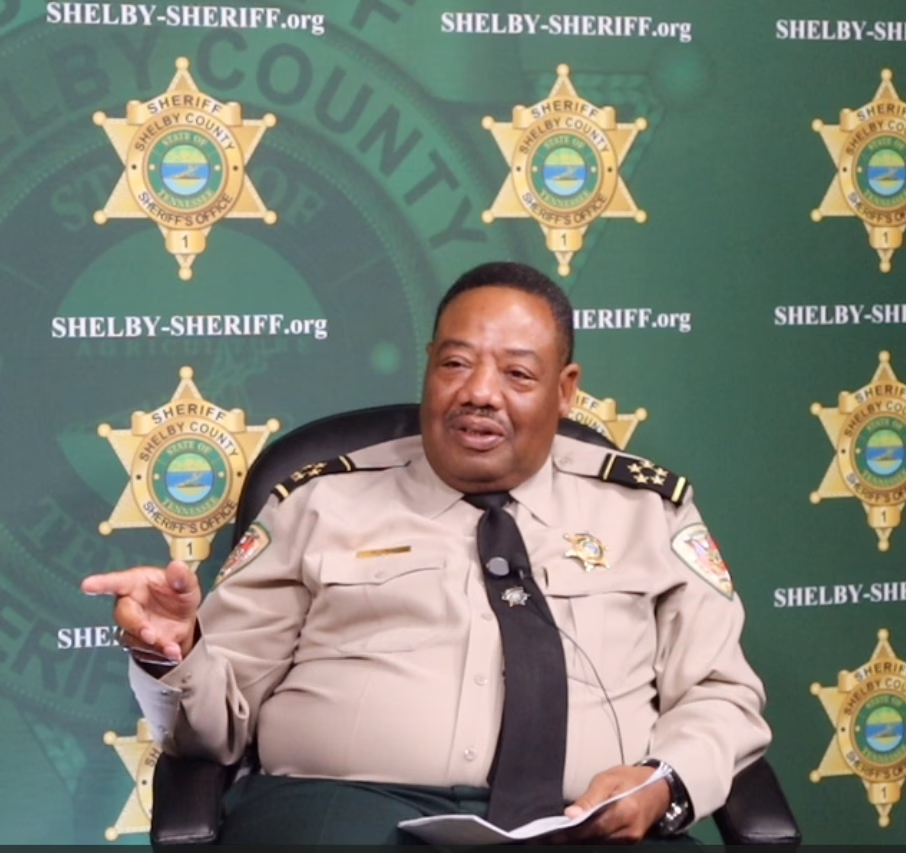
(LPL) – El sheriff del Condado de Shelby, Floyd Bonner, aseguró en una entrevista que la reciente participación de su oficina en el programa federal 287(g) será estrictamente administrativa y que no enviará a sus oficiales a buscar inmigrantes.
“Firmé la carta del programa 287(g), y es el modelo de cárcel”, explicó Bonner. “Existen diferentes tipos de programas, pero el que elegimos se limita al manejo de personas que ya están bajo custodia. Cuando alguien llega a la cárcel, se le pregunta dónde nació. Si responde que es de otro país, notificamos a las autoridades federales, y si ICE está interesado, ellos deben venir a buscarlo. Nosotros no salimos a hacerlo”.
El sheriff detalló que este acuerdo incluye una retención de 48 horas, autorizada tras un proceso de revisión con la Fiscalía del Condado y la Oficina del Fiscal General del Estado. “Todo se hace conforme a la ley y dentro de la cárcel”, explicó.
Bonner fue enfático al señalar que esta colaboración no implica redadas ni persecuciones en la comunidad. “Eso no significa que participaremos en ninguna redada de ICE. No estamos buscando inmigrantes. Tengo problemas mucho más importantes que salir a buscar inmigrantes. No va a existir, ni ahora ni después, una división del sheriff o de ICE saliendo a cazarlos”, subrayó con firmeza.
Además, precisó que la capacitación de los oficiales se centrará en tareas administrativas y tecnológicas, como verificar nombres en bases de datos federales, sin funciones operativas en la calle.
El programa 287(g), en su modalidad Warrant Service Officer (Oficial de Servicio de Órdenes), permite a los agentes locales colaborar con ICE en la gestión de detenidos con procesos migratorios activos sin alterar las funciones esenciales de seguridad pública del condado.
“Queremos que la comunidad hispana confíe en nosotros”
Otro de los puntos que tocó Bonner fue la relación entre la comunidad hispana y el departamento de alguaciles. El directivo indicó que están haciendo todo lo posible por construir lazos y que no haya miedo.
“Hemos trabajado duro para construir confianza con todas las comunidades inmigrantes. Vemos siempre casos de violencia doméstica y queremos que nos llamen cuando nos necesiten, queremos seguir trabajando duro para que esta confianza aumente, dijo.
“Hace algunos meses tuvimos un evento con niños de la escuela Northhaven Elementary y lamentablemente ningun niño hispano asistió por el miedo a ICE. Eso rompió mi corazón. Estamos viviendo tiempos muy difíciles”, agregó.
Para finalizar, Bonner se mostró abierto a seguir en contacto con la comunidad de Memphis para seguir resolviendo los problemas que enfrentamos.”Debemos tener comunicación, queremos trabajar de la mano con la comunidad y conocer sus problemas. Mi miedo más gande que alguien sea víctima de un crimen y no nos llame por tenernos miedo”.
English:
Sheriff Floyd Bonner: “I have much bigger problems than going out looking for immigrants”
(LPL) – Shelby County Sheriff Floyd Bonner stated in an interview that his office’s recent participation in the federal 287(g) program will be strictly administrative and that he will not be sending his officers out to search for immigrants.
“I signed the 287(g) program agreement, and it’s the jail model,” Bonner explained. “There are different types of programs, but the one we chose is limited to handling people who are already in custody. When someone arrives at the jail, they are asked where they were born. If they answer that they are from another country, we notify federal authorities, and if ICE is interested, they have to come and get them. We don’t go out and do that.”
The sheriff detailed that this agreement includes a 48-hour hold, authorized after a review process with the County Prosecutor’s Office and the State Attorney General’s Office. “Everything is done according to the law and within the jail,” he explained.
Bonner emphasized that this collaboration does not involve raids or persecution in the community. “That doesn’t mean we will participate in any ICE raids. We are not looking for immigrants. I have much more important problems than going out looking for immigrants. There will not be, now or ever, a division of the sheriff or ICE going out to hunt them down,” he firmly stressed.
He also specified that the officers’ training will focus on administrative and technological tasks, such as verifying names in federal databases, without operational duties on the street.
The 287(g) program, in its Warrant Service Officer modality, allows local officers to collaborate with ICE in managing detainees with active immigration proceedings without disrupting the county’s essential public safety functions.
“We want the Hispanic community to trust us.”
Another point Bonner addressed was the relationship between the Hispanic community and the sheriff’s department. The official indicated that they are doing everything possible to build relationships and eliminate fear. “We have worked hard to build trust with all immigrant communities. We constantly see cases of domestic violence, and we want them to call us when they need us. We want to continue working hard to increase this trust,” he said.
“A few months ago, we had an event with children from Northhaven Elementary School, and unfortunately, not a single Hispanic child attended because of fear of ICE. That broke my heart. We are living in very difficult times,” he added.
Finally, Bonner expressed his willingness to remain in contact with the Memphis community to continue addressing the problems they face. “We must maintain communication. We want to work hand in hand with the community and understand their problems. My biggest fear is that someone will be a victim of a crime and won’t call us because they are afraid,” he concluded.