Tácticas del «Memphis Safe Task Force» generan alarma: sin órdenes, están entrando a hoteles y moteles en busca información de personas
(LPL) – Una investigación publicada por The Institute for Public Service Reporting Memphis reveló que el “Memphis Safe Task
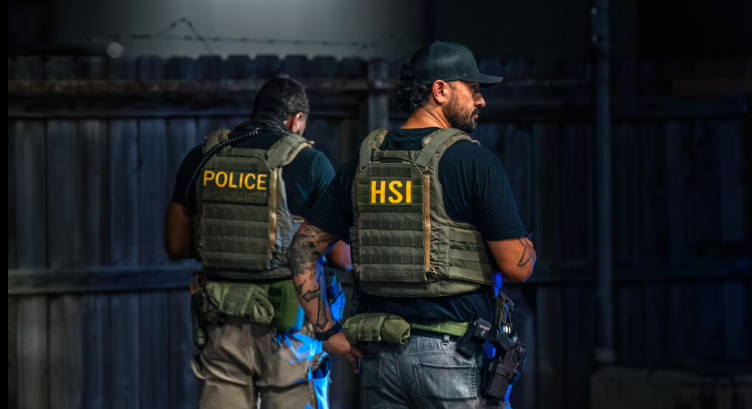
(LPL) – Una investigación publicada por The Institute for Public Service Reporting Memphis reveló que el “Memphis Safe Task Force”, operativo creado bajo la administración del presidente Donald Trump y que está compuesto por más de 700 agentes de diferentes agencias federales, además de la Guardia Nacional, está ejecutando operativos intensivos en hoteles y moteles de Memphis, con especial énfasis en zonas de bajos ingresos y vecindarios con fuerte presencia hispana.
Estos procedimientos incluyen tácticas que expertos describen como invasivas y potencialmente ilegales, creando preocupación sobre un posible enfoque selectivo hacia inmigrantes.
Según la publicación, oficiales del Departamento de Policía de Memphis (MPD) y agentes federales entraron a un motel sin orden judicial. Según el reporte, un oficial de MPD se colocó detrás del mostrador y, frente a una empleada confundida y asustada, accedió directamente al sistema interno del negocio.
Desde allí, copió información personal de decenas de huéspedes, incluyendo nombres, direcciones y datos de identificación como pasaportes y licencias.
La trabajadora, quien pidió mantener el anonimato por temor a represalias, describió el momento como uno lleno de presión e intimidación: “Me asusté porque no sabía si decirles que sí o que no”, dijo al medio. Su temor no era infundado: relató que nunca antes había enfrentado una situación similar y que no sabía si negarse podría traerle problemas con la policía.
La investigación también señala que esta táctica se ha repetido en múltiples moteles de la ciudad.
Algunos empleados explicaron que no conocían sus derechos y que la presencia de múltiples agentes con chalecos tácticos hacía casi imposible negarse. Como señaló un abogado defensor entrevistado, “hay un mecanismo de cumplimiento automático cuando los policías llegan en masa, con armas y equipo táctico”.
Los expertos legales consultados en la historia señalaron que estas acciones pueden violar protecciones constitucionales contra registros sin orden judicial.
La Corte Suprema ya ha establecido que los hoteles tienen derecho a negarse a entregar registros sin una orden. Aun así, la investigación encontró que varios agentes solicitaron —e incluso tomaron— datos sin cumplir ese requisito legal.
Un propietario de motel entrevistado dijo que instruyó a su personal a no entregar información sin una orden: “Hay que proteger la privacidad de los huéspedes también”, afirmó, aunque pidió que no se mencionara su nombre por miedo a represalias.
Sin embargo, otros empleados sí entregaron los registros porque simplemente asumieron que la policía debía estar actuando dentro de la ley. Una empleada que colaboró explicó: “No quiero meterme en problemas, ¿sabe?”, reflejando el clima de presión que describen muchos testigos entrevistados.
La participación del MPD en estas operaciones, especialmente en coordinación con ICE y Homeland Security Investigations, ha encendido alarmas entre líderes comunitarios hispanos. Mauricio Calvo, presidente de Latino Memphis, dijo en la investigación de The Institute for Public Service Reporting Memphis que la recopilación de datos por parte de equipos que incluyen agentes migratorios podría poner en riesgo a familias vulnerables: “Es posible que usen esa información en el futuro… me preocupa qué harán con esos datos”, afirmó. También criticó que estas acciones contradicen promesas hechas por autoridades locales respecto a no involucrarse en tareas de inmigración.
Stella Yarbrough, directora legal de ACLU Tennessee, advirtió que la recopilación de registros podría facilitar investigaciones migratorias, incluso si ese no es el propósito declarado: “DHS podría usarlo para identificar a personas con pasaportes extranjeros y correr sus datos por todo tipo de bases. Eso es preocupante”, dijo.
Aunque el Memphis Safe Task Force asegura que sus operativos se centran en la búsqueda de fugitivos y no en la inmigración, la investigación de The Institute for Public Service Reporting Memphis concluye que las tácticas aplicadas, combinadas con la falta de transparencia y la presencia de agentes federales, han generado desconfianza y temor en comunidades hispanas que ya enfrentan vulnerabilidades adicionales.
English:
Tactics of the Memphis Safe Task Force raise alarm: without warrants, they are entering hotels and motels in search of information on people
(LPL) – An investigation published by The Institute for Public Service Reporting Memphis revealed that the Memphis Safe Task Force, an operation created under President Donald Trump’s administration and comprised of more than 700 agents from various federal agencies, as well as the National Guard, is conducting intensive operations in Memphis hotels and motels, with a particular focus on low-income areas and neighborhoods with a strong Hispanic presence.
These procedures include tactics that experts describe as invasive and potentially illegal, raising concerns about a possible selective targeting of immigrants.
According to the publication, officers from the Memphis Police Department (MPD) and federal agents entered a motel without a warrant. The report states that an MPD officer positioned himself behind the counter and, in front of a confused and frightened employee, directly accessed the business’s internal system. From there, he copied personal information from dozens of guests, including names, addresses, and identification data such as passport and driver’s license numbers.
The employee, who requested anonymity for fear of retaliation, described the moment as one filled with pressure and intimidation: “I was scared because I didn’t know whether to say yes or no,” she told the media outlet. Her fear was not unfounded: she recounted that she had never faced a similar situation before and didn’t know if refusing could get her in trouble with the police.
The investigation also indicates that this tactic has been repeated in multiple motels in the city. Some employees explained that they were unaware of their rights and that the presence of multiple officers in tactical vests made it nearly impossible to refuse. As one defense attorney interviewed pointed out, “There’s an automatic compliance mechanism when police arrive en masse, with weapons and tactical gear.”
Legal experts consulted for the story noted that these actions can violate constitutional protections against warrantless searches. The Supreme Court has already established that hotels have the right to refuse to hand over records without a warrant. Even so, the investigation found that several officers requested, and even seized, data without meeting this legal requirement.
A motel owner interviewed said he instructed his staff not to hand over information without a warrant: “We have to protect the privacy of our guests, too,” he said, though he asked that his name not be mentioned for fear of retaliation.
However, other employees did hand over the records because they simply assumed the police must be acting within the law. One employee who cooperated explained, “I don’t want to get in trouble, you know?” reflecting the climate of pressure described by many witnesses interviewed.
The MPD’s involvement in these operations, especially in coordination with ICE and Homeland Security Investigations, has raised concerns among Hispanic community leaders. Mauricio Calvo, president of Latino Memphis, said in an investigation by The Institute for Public Service Reporting Memphis that data collection by teams that include immigration agents could put vulnerable families at risk: “They might use that information in the future… I’m worried about what they’ll do with that data,” he said.
He also criticized these actions for contradicting promises made by local authorities not to get involved in immigration matters.
Stella Yarbrough, legal director of the ACLU of Tennessee, warned that the collection of records could facilitate immigration investigations, even if that is not the stated purpose: “DHS could use it to identify people with foreign passports and run their data through all kinds of databases. That is concerning,” she said.
Although the Memphis Safe Task Force maintains that its operations focus on the search for fugitives and not immigration, an investigation by The Institute for Public Service Reporting Memphis concludes that the tactics employed, combined with a lack of transparency and the presence of federal agents, have generated distrust and fear in Hispanic communities that already face additional vulnerabilities.