Una directriz permite a agentes de ICE entrar en hogares sin una orden judicial, dice un memorando
(LPL/AP) – Los agentes federales de inmigración están ejerciendo un poder amplio para entrar por la fuerza en los

(LPL/AP) – Los agentes federales de inmigración están ejerciendo un poder amplio para entrar por la fuerza en los hogares de las personas sin una orden judicial, según un memorando interno de Inmigración y Control de Aduanas (ICE) obtenido por The Associated Press, lo que marca una fuerte reversión de la directriz de larga data destinada a respetar los límites constitucionales sobre estas pesquisas por parte del Gobierno.
El memorando autoriza a los agentes de ICE a usar la fuerza para entrar en una residencia con base únicamente en una orden administrativa más limitada para arrestar a alguien con una orden final de deportación, una medida que, según activistas, choca con las protecciones de la Cuarta Enmienda y trastoca años de consejos dados a las comunidades inmigrantes.
El cambio se produce mientras el Gobierno de Trump expande drásticamente los arrestos de inmigración a nivel nacional, desplegando a miles de agentes bajo una campaña de deportación masiva que ya está remodelando las tácticas de aplicación de la ley en ciudades como Minneapolis.
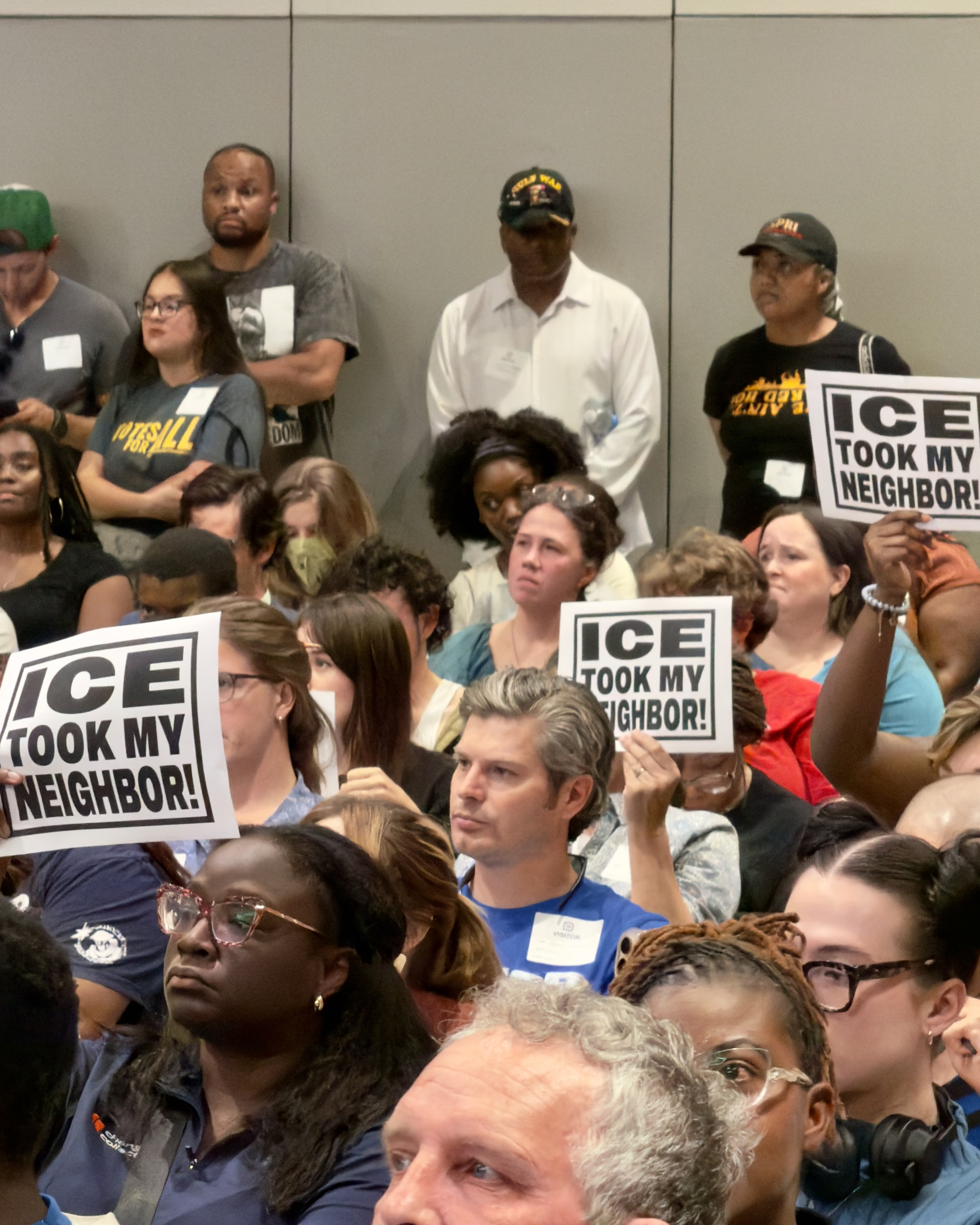
Durante años, defensores de inmigrantes, grupos de ayuda legal y gobiernos locales han instado a las personas a no abrir la puerta a los agentes de inmigración a menos que les muestren una orden firmada por un juez. Esa directriz tiene su raíz en fallos de la Corte Suprema que generalmente prohíben a las fuerzas del orden entrar en un hogar sin aprobación judicial. La medida de ICE socava directamente ese consejo en un momento en que los arrestos se están acelerando bajo la represión inmigratoria del Gobierno.
El propio memorando no se ha compartido ampliamente dentro de la agencia, según una denuncia de un informante, pero su contenido se ha utilizado para entrenar a los nuevos agentes de ICE que se desplegarán en ciudades y pueblos para implementar la política migratoria del presidente. A las nuevas contrataciones de ICE y a quienes aún están en entrenamiento se les indica que sigan la orientación del memorando en lugar de los materiales de capacitación escritos que en realidad contradicen el memorando, según la divulgación del informante.
Se desconoce cuán ampliamente se ha aplicado la directriz en las operaciones de aplicación de la ley de inmigración. The Associated Press fue testigo de cómo agentes de ICE irrumpieron por la puerta principal de la casa de un hombre de Liberia en Minneapolis el 11 de enero solo con una orden administrativa, usando equipo táctico pesado y con sus rifles desenfundados.
Es casi seguro que el cambio enfrentará desafíos legales y fuertes críticas de grupos de defensa de derechos humanos y gobiernos estatales y locales que han pasado años instando con éxito a las personas a no abrir la puerta a menos que ICE les muestre una orden firmada por un juez.
The Associated Press obtuvo el memorando y la denuncia del informante de un funcionario del Congreso, quien lo compartió bajo condición de anonimato para discutir documentos sensibles. AP verificó la autenticidad de los relatos en la denuncia.
El memorando, firmado por el director interino de ICE, Todd Lyons, y fechado el 12 de mayo de 2025, dice: “Aunque el Departamento de Seguridad Nacional de EE.UU. (DHS) no ha dependido históricamente solo de órdenes administrativas para arrestar a extranjeros sujetos a órdenes finales de deportación en su lugar de residencia, la Oficina del Asesor Jurídico General del DHS ha determinado recientemente que la Constitución de EE.UU., la Ley de Inmigración y Nacionalidad, y las regulaciones de inmigración no prohíben depender de órdenes administrativas para este propósito”.
El memorando no detalla cómo se tomó esa determinación ni cuáles podrían ser sus consecuencias legales.
Cuando se le preguntó sobre el memorando, la portavoz de Seguridad Nacional, Tricia McLaughlin, dijo en una declaración enviada por correo electrónico a AP que todas las personas a quienes el departamento entrega una orden administrativa ya han tenido “pleno debido proceso y una orden final de deportación”.
Ella agregó que los funcionarios que emiten esas órdenes también han encontrado causa probable para el arresto de la persona. Dijo que la Corte Suprema y el Congreso han “reconocido la legitimidad de las órdenes administrativas en casos de aplicación de las leyes de inmigración”, sin dar más detalles. McLaughlin no respondió a preguntas sobre si los agentes de ICE han entrado en la casa de una persona desde que se emitió el memorando confiando únicamente en una orden administrativa y, de ser así, con qué frecuencia.
Los arrestos recientes muestran las tácticas
Whistleblower Aid, una organización jurídica sin fines de lucro que asiste a trabajadores que denuncian irregularidades, dijo en la denuncia del informante obtenida por The Associated Press que representa a dos funcionarios anónimos del Gobierno de EE.UU. “que revelan una directiva de política secreta —y aparentemente inconstitucional—”.
Una ola de arrestos recientes y de alto perfil, muchos de ellos en casas y negocios privados y registrados en video, ha puesto el foco en las tácticas de arresto migratorio, incluida la utilización de órdenes adecuadas por parte de los agentes.
La mayoría de los arrestos inmigratorios se ejecutan bajo órdenes administrativas, documentos internos emitidos por las autoridades de inmigración que autorizan el arresto de una persona específica pero no permiten a los agentes entrar por la fuerza en viviendas privadas u otros lugares no públicos sin consentimiento. Solo las órdenes firmadas por jueces otorgan esa autoridad.
Todas las operaciones policiales —incluidas las realizadas por ICE y la Oficina de Aduanas y Protección Fronteriza— están regidas por la Cuarta Enmienda de la Constitución, que protege a todas las personas en el país de registros e incautaciones irrazonables.
Las personas pueden legalmente negarse a permitir la entrada de agentes federales de inmigración a una propiedad privada si los agentes solo tienen una orden administrativa, con algunas excepciones limitadas.
Este mes, agentes federales embistieron la puerta de la casa en Minneapolis de un hombre de Liberia con una orden de deportación de 2023, quien luego fue arrestado. Documentos revisados por AP revelaron que los agentes solo tenían una orden administrativa, lo que significa que ningún juez autorizó el allanamiento de la propiedad privada.
El memorando se mostró a funcionarios “seleccionados”
El memorando dice que los agentes de ICE pueden entrar por la fuerza en casas y arrestar a inmigrantes usando solo una orden administrativa firmada conocida como I-205 si tienen una orden final de deportación emitida por un juez de inmigración, la Junta de Apelaciones de Inmigración o un juez de distrito o magistrado.
El memorando subraya que los agentes primero deben golpear la puerta y decir quiénes son y por qué están en la residencia. Tienen un límite de horario para entrar —después de las 6 a.m. y antes de las 10 p.m. Las personas dentro deben recibir una “oportunidad razonable de actuar legalmente”. Pero si eso no funciona, dice el memorando, pueden usar la fuerza para entrar.
“Si el extranjero se niega a admitirles, los funcionarios y agentes de ICE deben usar solo la cantidad necesaria y razonable de fuerza para entrar en la residencia del extranjero, siguiendo la notificación adecuada de la autoridad del funcionario o agente y su intención de entrar”, dice el memorando.
El memorando está dirigido a todo el personal de ICE. Pero solo se ha mostrado a “ciertos funcionarios seleccionados del DHS” que luego lo compartieron con algunos empleados a quienes se les indicó leerlo y devolverlo, escribió Whistleblower Aid en la divulgación.
A uno de los dos informantes solo se le permitió ver el memorando en presencia de un supervisor y luego tuvo que devolverlo. Esa persona no pudo tomar notas. Un informante pudo acceder al documento y divulgarlo legalmente al Congreso, dijo Whistleblower Aid.
Aunque el memorando se emitió en mayo, David Kligerman, vicepresidente sénior y asesor especial de Whistleblower Aid, dijo que tomó tiempo para que sus clientes encontraran “una vía segura y legal para divulgarlo a los legisladores y al pueblo estadounidense”.
Los agentes de ICE reciben la orden de confiar únicamente en órdenes administrativas, dice el memorando
ICE ha contratado rápidamente a miles de nuevos agentes de deportación para llevar a cabo la agenda de deportaciones masivas del presidente. Se los entrena en el Centro Federal de Capacitación para el Cumplimiento de la Ley en Brunswick, Georgia. Durante una visita allí de The Associated Press en agosto, los funcionarios de ICE dijeron repetidamente que se estaba capacitando a nuevos oficiales para seguir la Cuarta Enmienda.
Pero, según el relato de los denunciantes, a los agentes recién contratados de ICE se les está diciendo que pueden confiar únicamente en órdenes administrativas para entrar a las casas y hacer arrestos, aunque eso contradiga los materiales de capacitación escritos del Departamento de Seguridad Nacional.
Los agentes de ICE a menudo esperan durante horas a que la persona que quieren arrestar salga a la calle para poder hacer el arresto en la acera o en el lugar de trabajo de la persona, lugares públicos donde se les permite operar sin el riesgo de infringir los derechos de la Cuarta Enmienda de la persona.
Whistleblower Aid calificó la nueva política como una “ruptura total de la ley” y dijo que socava la “Cuarta Enmienda y los derechos que protege”.
English:
A directive allows ICE agents to enter homes without a warrant, a memo says
(LPL/AP) – Federal immigration agents are exercising broad power to forcibly enter people’s homes without a warrant, according to an internal Immigration and Customs Enforcement (ICE) memo obtained by The Associated Press, marking a sharp reversal of long-standing guidance intended to respect constitutional limits on such government searches.
The memo authorizes ICE agents to use force to enter a residence based solely on a more limited administrative warrant to arrest someone with a final deportation order—a move that activists say clashes with Fourth Amendment protections and upends years of advice given to immigrant communities.
The change comes as the Trump administration dramatically expands immigration arrests nationwide, deploying thousands of agents under a mass deportation campaign that is already reshaping law enforcement tactics in cities like Minneapolis.
For years, immigrant advocates, legal aid groups, and local governments have urged people not to open their doors to immigration agents unless presented with a warrant signed by a judge. That guidance is rooted in Supreme Court rulings that generally prohibit law enforcement from entering a home without judicial approval. The ICE memo directly undermines that advice at a time when arrests are accelerating under the administration’s immigration crackdown.
The memo itself has not been widely shared within the agency, according to a whistleblower complaint, but its contents have been used to train new ICE agents who will be deployed to cities and towns to implement the president’s immigration policy. New ICE hires and those still in training are being instructed to follow the memo’s guidance instead of written training materials that actually contradict the memo, according to the whistleblower disclosure.
It is unclear how widely the guidance has been applied in immigration enforcement operations. The Associated Press witnessed ICE agents bursting through the front door of a Liberian man’s home in Minneapolis on January 11 using only an administrative warrant, wearing heavy tactical gear and with their rifles drawn.
The change is almost certain to face legal challenges and strong criticism from human rights advocacy groups and state and local governments that have spent years successfully urging people not to open their doors unless ICE agents show them a warrant signed by a judge.
The Associated Press obtained the memo and the whistleblower complaint from a congressional official, who shared them on condition of anonymity to discuss sensitive documents. AP verified the authenticity of the accounts in the complaint.
The memo, signed by acting ICE Director Todd Lyons and dated May 12, 2025, states: “Although the U.S. Department of Homeland Security (DHS) has not historically relied solely on administrative warrants to arrest noncitizens subject to final orders of removal at their residences, the DHS Office of the General Counsel has recently determined that the U.S. Constitution, the Immigration and Nationality Act, and immigration regulations do not prohibit reliance on administrative warrants for this purpose.”
The memo does not detail how that determination was made or what its legal consequences might be.
When asked about the memo, Homeland Security spokesperson Tricia McLaughlin said in an emailed statement to AP that all individuals to whom the department serves an administrative warrant have already had “full due process and a final order of removal.”
She added that the officers issuing those warrants have also found probable cause for the person’s arrest. She said the Supreme Court and Congress have “recognized the legitimacy of administrative warrants in immigration enforcement cases,” without elaborating. McLaughlin did not respond to questions about whether ICE agents have entered a person’s home since the memo was issued relying solely on an administrative warrant and, if so, how often.
The recent arrests show the tactics
Whistleblower Aid, a non-profit legal organization that assists workers who report wrongdoing, said in the whistleblower complaint obtained by The Associated Press that it represents two anonymous U.S. government officials «who are revealing a secret—and apparently unconstitutional—policy directive.»
A wave of recent, high-profile arrests, many in private homes and businesses and captured on video, has put a spotlight on immigration enforcement tactics, including agents’ use of proper warrants.
Most immigration arrests are carried out under administrative warrants, internal documents issued by immigration authorities that authorize the arrest of a specific person but do not allow agents to forcibly enter private homes or other non-public places without consent. Only warrants signed by judges grant that authority.
All law enforcement operations — including those conducted by ICE and Customs and Border Protection — are governed by the Fourth Amendment of the Constitution, which protects all people in the country from unreasonable searches and seizures.
Individuals can legally refuse to allow federal immigration agents onto private property if the agents only have an administrative warrant, with some limited exceptions.
This month, federal agents rammed down the door of a Minneapolis home belonging to a Liberian man with a 2023 deportation order, who was subsequently arrested. Documents reviewed by the AP revealed that the agents only had an administrative warrant, meaning no judge authorized the search of the private property.
The memo was shown to “select” officials
The memo states that ICE agents can forcibly enter homes and arrest immigrants using only a signed administrative warrant known as an I-205 if they have a final order of removal issued by an immigration judge, the Board of Immigration Appeals, or a district or magistrate judge.
The memo emphasizes that agents must first knock and announce who they are and why they are at the residence. They have a time limit for entry — after 6 a.m. and before 10 p.m. Those inside must be given a “reasonable opportunity to act lawfully.” But if that doesn’t work, the memo says, they can use force to enter.
“If the alien refuses to admit them, ICE officers and agents should use only the necessary and reasonable amount of force to enter the alien’s residence, following proper notification of the officer’s or agent’s authority and intent to enter,” the memo states.
The memo is addressed to all ICE personnel. But it has only been shown to “certain selected DHS officials” who then shared it with some employees who were instructed to read it and return it, Whistleblower Aid wrote in the disclosure.
One of the two whistleblowers was only allowed to view the memo in the presence of a supervisor and then had to return it. That person was not allowed to take notes. One whistleblower was able to access the document and legally disclose it to Congress, Whistleblower Aid said.
Although the memo was issued in May, David Kligerman, senior vice president and special counsel for Whistleblower Aid, said it took time for his clients to find “a safe and legal avenue to disclose it to lawmakers and the American people.”
ICE agents are instructed to rely solely on administrative warrants, the memo says
ICE has rapidly hired thousands of new deportation agents to carry out the president’s mass deportation agenda. They are being trained at the Federal Law Enforcement Training Center in Brunswick, Georgia. During a visit there by The Associated Press in August, ICE officials repeatedly said that new officers were being trained to follow the Fourth Amendment.
But, according to the whistleblowers’ account, newly hired ICE agents are being told they can rely solely on administrative warrants to enter homes and make arrests, even though this contradicts the Department of Homeland Security’s written training materials.
ICE agents often wait for hours for the person they want to arrest to come outside so they can make the arrest on the sidewalk or at the person’s workplace—public places where they are allowed to operate without risking infringing on the person’s Fourth Amendment rights. Whistleblower Aid described the new policy as a «complete breach of the law» and said it undermines the «Fourth Amendment and the rights it protects.»