Venezuela, una semana después del sismo: refugios llenos, rescates en marcha y una crisis humanitaria que crece
(LPL/CNN) – Una semana después del terremoto doble que sacudió Venezuela, la emergencia sigue creciendo. La cifra oficial de
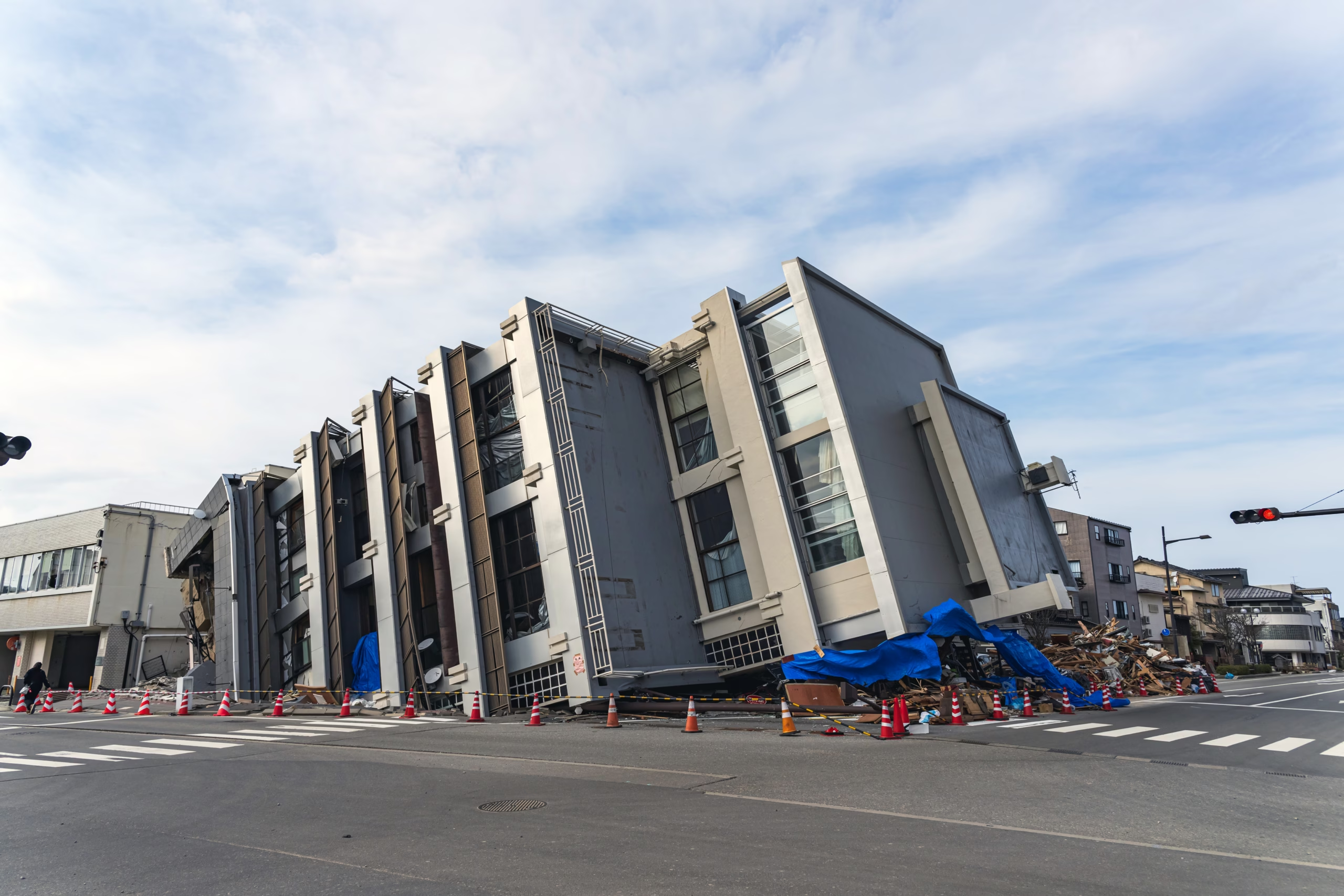
(LPL/CNN) – Una semana después del terremoto doble que sacudió Venezuela, la emergencia sigue creciendo. La cifra oficial de muertos ya alcanza casi las 2.000 personas, mientras equipos venezolanos y extranjeros continúan las labores de rescate, que se han prolongado durante días en Caracas y La Guaira, las zonas más afectadas del país.
Con el paso de los días, el impacto se hace más visible: aumentan las personas sin vivienda, más casas han quedado dañadas y los refugios improvisados siguen llenándose. La Agencia de Naciones Unidas para los Refugiados (ACNUR), que coordina la respuesta en materia de protección y albergues, advirtió este martes que la situación humanitaria en las zonas afectadas “se ha deteriorado rápidamente”.
Con miles de personas aún sin hogar, hospitales al límite y comunidades enteras desplazadas, la emergencia en Venezuela sigue sin una salida clara.
Una emergencia que crece sobre otra crisis
Según ACNUR, unas 16.000 personas han resultado afectadas y han tenido que buscar dónde vivir. Muchas no lo han conseguido. Un 39 % permanece en calles o espacios públicos, mientras otros se alojan con familiares o en refugios temporales como iglesias, escuelas o instalaciones improvisadas.
Afirmó que se observa “una grave escasez de alimentos, el colapso de los servicios básicos y un aumento de los riesgos de protección para la población desplazada”.
En Caracas, el Parque del Este se ha convertido en un refugio temporal para cientos de familias que continúan llegando mientras esperan saber qué pasará con sus hogares que resultaron dañados, y en muchos casos inhabitables, durante los sismos.
Mientras tanto, especialistas están recorriendo los edificios afectados y evalúan, a través de un sistema de “semáforo”, cuáles siguen siendo habitables y cuáles corren riesgo de colapso por los daños estructurales.
Además, la presidenta encargada, Delcy Rodríguez, prometió este lunes la construcción de nuevas viviendas para los damnificados. “Hay miles de soluciones antes de que finalice el año”, dijo en una transmisión del canal estatal VTV desde la instalación del Estado Mayor para la Creación de Campamentos Transitorios y la Planificación de Construcción de Viviendas.
El sistema de salud, que ya enfrentaba dificultades antes de la tragedia, también está bajo fuerte presión. La OMS informó que hospitales en varias regiones funcionan con hacinamiento, servicios interrumpidos y retrasos en cirugías. Al menos tres centros de salud sufrieron daños graves y otros seis operan parcialmente.
Además, casi 50.000 personas continúan desaparecidas en La Guaira y Caracas bajo los escombros de estructuradas colapsadas, dijo la organización no gubernamental Comité Internacional de Rescate (IRC, por sus siglas en inglés) en un comunicado.
El alcance del daño
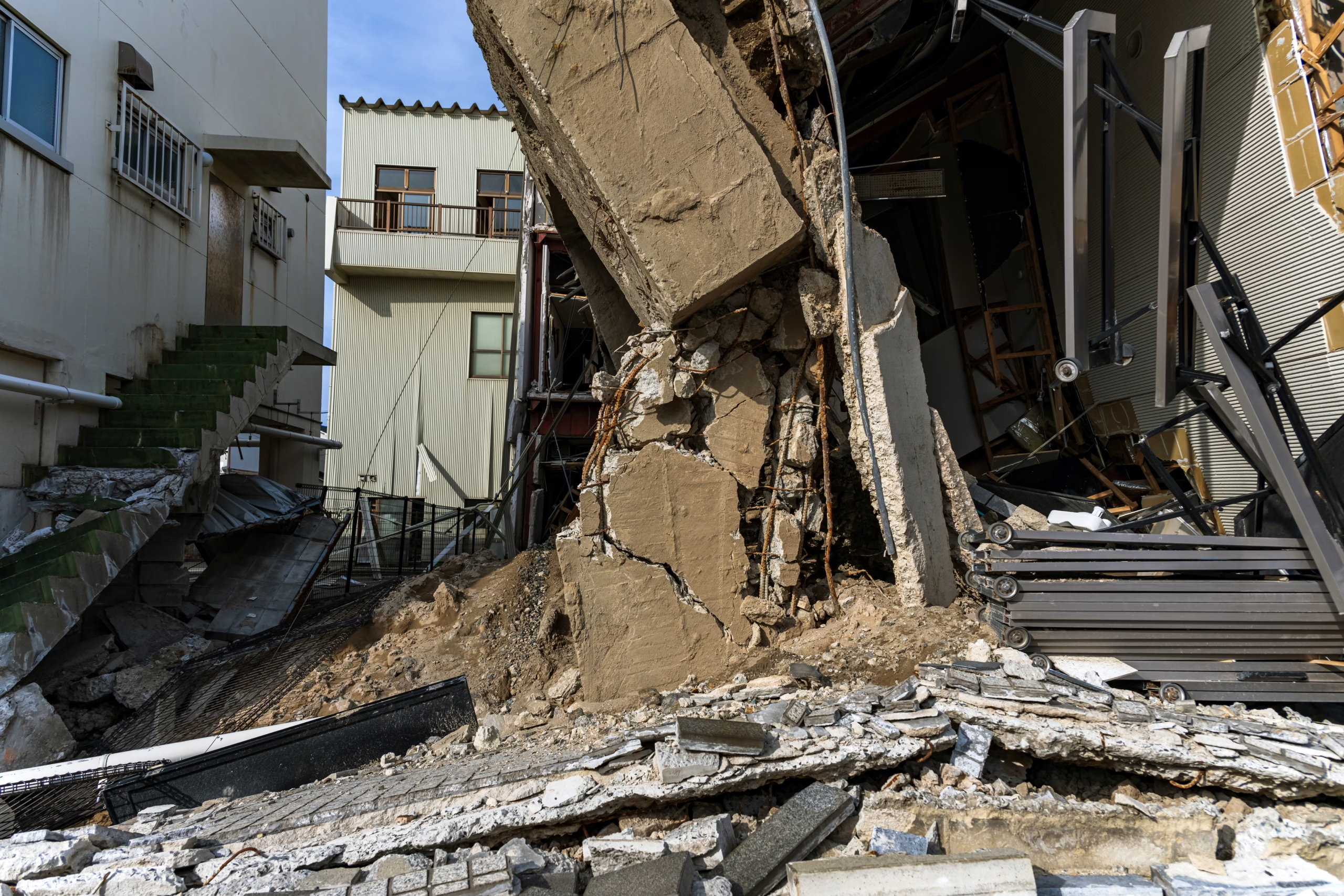
Las cifras oficiales dan una idea de la magnitud del desastre. Según datos presentados este martes por Jorge Rodríguez, presidente de la Asamblea Nacional de Venezuela, se tiene registro de 189 edificios totalmente colapsados en todo el país, de los cuales 158 estaban en La Guaira.
En total, Rodríguez dijo que se estima que hay 855 edificios dañados en el país, ya sea con daños graves, parciales o colapsos totales.
Esta cifra está lejos de los números presentados por instituciones como la NASA. La agencia espacial de Estados Unidos estimó que hasta 60.000 edificios podrían haber sido dañados o destruidos en Venezuela tras los terremotos, según un informe basado en radares satelitales publicado el fin de semana.
Entre pérdidas y una ventana que se cierra
Las labores de búsqueda y rescate siguen activas en las zonas más afectadas, especialmente en Caracas y La Guaira, donde los equipos trabajan entre estructuras colapsadas desde hace casi una semana. El paso de los días complica las operaciones y reduce las posibilidades de encontrar sobrevivientes.
“Nos quedan los rescates más difíciles y más riesgosos”, reconoció desde La Guaira Exequiel Gallardo, miembro del Grupo USAR de Bomberos de Chile. El especialista describió un escenario en el que el tiempo se vuelve un factor crítico, mientras los equipos intentan acceder a zonas cada vez más inestables.
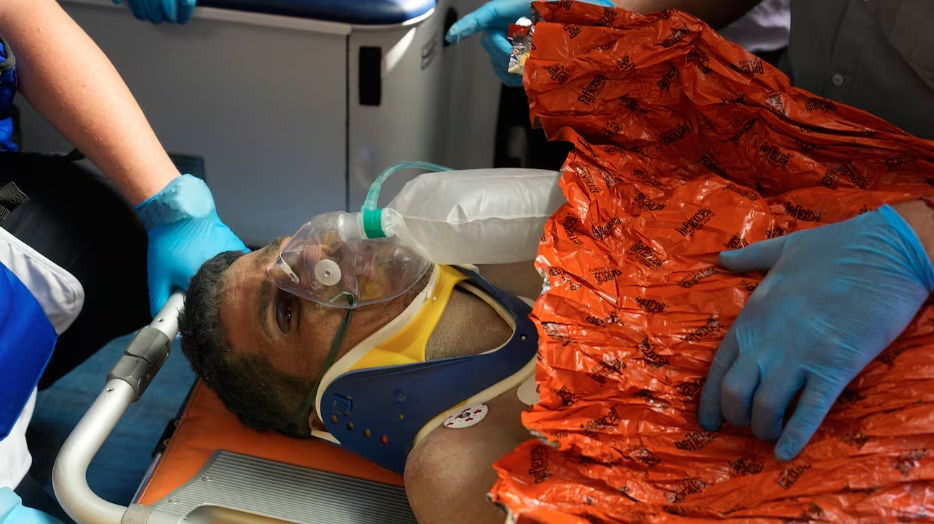
Aun así, en medio de ese panorama, siguen apareciendo historias de esperanza. En Caracas, un equipo de rescatistas de Jordania logró sacar con vida a un niño de entre los escombros seis días después del sismo. El menor fue encontrado con signos vitales estables y recibió atención inmediata antes de ser trasladado a un hospital.
Pero no para todos el destino es el mismo. En La Guaira, una madre recuperó el cuerpo de su hijo, uno de los más de 100 migrantes venezolanos deportados desde Estados Unidos que había sido alojado en el Hotel Santuario el mismo día que los sismos derrumbaron el edificio. Tras varios días de búsqueda, confirmó su muerte y pudo identificarlo en una morgue.
La ayuda internacional sigue llegando
La ayuda internacional sigue llegando. Las Grandes Ligas de Béisbol (MLB) —la principal liga de béisbol de Estados Unidos— y su asociación de jugadores anunciaron una donación de US$ 1 millón a la Cruz Roja para apoyar la recuperación.
En La Guaira, la organización Samaritan’s Purse instaló un hospital de campaña con quirófanos y unidades de cuidados intensivos para atender a los heridos. “Muchas personas necesitan atención médica con urgencia”, señalaron.
Además, la ONU prevé asistir a medio millón de personas en los refugios instalados tras los terremotos, según estimó este martes la directora del Programa Mundial de Alimentos (PMA) para el país, Stephanie Hochstetter. La funcionaria explicó que ya han distribuido paquetes de alimentos de emergencia a unas 1.200 personas, aunque esperan que la cifra aumente en los próximos meses.
English:
Venezuela, one week after the earthquake: shelters full, rescue efforts underway, and a growing humanitarian crisis
(LPL/CNN) – One week after the double earthquake that shook Venezuela, the emergency continues to escalate. The official death toll has reached nearly 2,000 people, while Venezuelan and foreign teams continue rescue operations that have been ongoing for days in Caracas and La Guaira, the country’s hardest-hit areas.
As the days pass, the impact becomes increasingly visible: the number of homeless people is rising, more homes have been damaged, and makeshift shelters continue to fill up. The UN Refugee Agency (UNHCR), which is coordinating the protection and shelter response, warned on Tuesday that the humanitarian situation in the affected areas «has deteriorated rapidly.»
With thousands of people still homeless, hospitals stretched to the limit, and entire communities displaced, there is no clear end in sight for the emergency in Venezuela.
An emergency compounding an existing crisis
According to the UNHCR, some 16,000 people have been affected and forced to seek housing. Many have been unable to find it; 39% remain on the streets or in public spaces, while others are staying with relatives or in temporary shelters such as churches, schools, or makeshift facilities.
The agency reported «a severe food shortage, the collapse of basic services, and increased protection risks for the displaced population.»
In Caracas, Parque del Este has become a temporary shelter for hundreds of families who keep arriving while they wait to learn the fate of their homes—many of which were damaged or rendered uninhabitable by the earthquakes.
Meanwhile, specialists are inspecting affected buildings, using a «traffic light» system to assess which ones remain habitable and which are at risk of collapse due to structural damage.
Additionally, Acting President Delcy Rodríguez promised on Monday that new housing would be built for those affected. “There are thousands of solutions available before the year ends,” he said during a broadcast on the state-run channel VTV, speaking from the headquarters of the task force established to create temporary camps and plan housing construction.
The healthcare system, already struggling prior to the tragedy, is also under immense strain. The WHO reported that hospitals in several regions are dealing with overcrowding, service disruptions, and surgical delays. At least three health centers sustained severe damage, while six others are operating only partially.
Furthermore, nearly 50,000 people remain missing in La Guaira and Caracas, trapped beneath the rubble of collapsed structures, the non-governmental organization International Rescue Committee (IRC) stated.
The extent of the damage
Official figures offer a glimpse into the scale of the disaster. According to data presented this Tuesday by Jorge Rodríguez, president of Venezuela’s National Assembly, 189 buildings have completely collapsed nationwide—158 of which were in La Guaira.
In total, Rodríguez estimated that 855 buildings across the country have sustained damage, ranging from severe structural issues and partial damage to total collapse.
This figure stands in stark contrast to numbers presented by institutions such as NASA. The U.S. space agency estimated that up to 60,000 buildings in Venezuela could have been damaged or destroyed following the earthquakes, according to a report based on satellite radar data released over the weekend.
Losses and a closing window
Search and rescue efforts remain underway in the hardest-hit areas, particularly Caracas and La Guaira, where teams have been working amidst collapsed structures for nearly a week. As days pass, operations become more complicated, and the chances of finding survivors diminish.
“The most difficult and riskiest rescues still lie ahead,” acknowledged Exequiel Gallardo, a member of the Chilean Firefighters’ USAR team, speaking from La Guaira. The specialist described a scenario where time is becoming a critical factor as teams attempt to access increasingly unstable areas.
Yet, amidst this situation, stories of hope continue to emerge. In Caracas, a rescue team from Jordan managed to pull a boy alive from the rubble six days after the earthquake. The child was found with stable vital signs and received immediate care before being taken to a hospital.
However, not everyone meets the same fate. In La Guaira, a mother recovered the body of her son—one of more than 100 Venezuelan migrants deported from the United States who had been staying at the Hotel Santuario on the day the earthquakes caused the building to collapse. After a search lasting several days, she confirmed his death and was able to identify him at a morgue.
International aid continues to arrive
International aid continues to arrive. Major League Baseball (MLB)—the premier baseball league in the United States—and its players’ association announced a $1 million donation to the Red Cross to support recovery efforts.
In La Guaira, the organization Samaritan’s Purse set up a field hospital equipped with operating rooms and intensive care units to treat the injured. «Many people are in urgent need of medical care,» they noted.
Additionally, the UN plans to assist half a million people in shelters set up following the earthquakes, according to estimates provided on Tuesday by Stephanie Hochstetter, the World Food Programme (WFP) country director. She explained that emergency food packages have already been distributed to approximately 1,200 people, though that figure is expected to rise in the coming months.