Los derechistas Keiko Fujimori y Rafael López Aliaga encabezan la ajustada pugna para pasar a la segunda vuelta presidencial
(LPL/BBC) – El pasado domingo los peruanos fueron a las urnas para elegir entre un número récord de 35

(LPL/BBC) – El pasado domingo los peruanos fueron a las urnas para elegir entre un número récord de 35 candidatos a la presidencia y, tal como se preveía, las tendencias indican que ninguno llegó al 50% de los votos necesarios para ganar en primera ronda.
Con 73% de los votos contabilizados hasta las 8 pm de este lunes (hora local), la derechista Keiko Fujimori lidera con 16% del total, seguida de cerca por el ultraconservador Rafael López Aliaga, con 12%. En tercer lugar está el centrista Jorge Nieto, con 11%.
Sin embargo, es tan escasa la diferencia porcentual entre candidatos y está tan fragmentado el voto que aún todo puede pasar.
En medio del aumento del crimen y una crisis política que ha erosionado la confianza en las instituciones, la jornada electoral no estuvo exenta de problemas.
Las urnas abrieron a las 7 de la mañana hora local con retrasos en algunas zonas, incluidas la capital, donde más de 63 mil personas se quedaron sin votar, informó este domingo Piero Corvetto, jefe de la Oficina Nacional de Procesos Electorales (ONPE).
Según Corvetto, falló la distribución del material electoral, pero a lo largo del día los medios locales también reportaron demoras en la instalación de mesas de votación e inasistencias de ciudadanos encargados de recibir los sufragios.
Para solucionar el problema, ONPE dispuso que los ciudadanos afectados por la falta de material electoral podrán votar el lunes.
Unas 27 millones de personas estaban habilitadas para votar tanto en Perú como en el exterior.
Además de presidente y vicepresidente, este domingo también se eligieron diputados y senadores.
De hecho, quien resulte electo seguramente se enfrentará a un Congreso dividido, lo cual no solo podría dificultar la puesta en marcha de su agenda política, sino también su propia subsistencia en el cargo.
El ganador del balotaje será el noveno presidente de Perú en 10 años.
Si se confirma la tendencia de los primeros resultados, la segunda vuelta será entre dos candidatos de derecha.
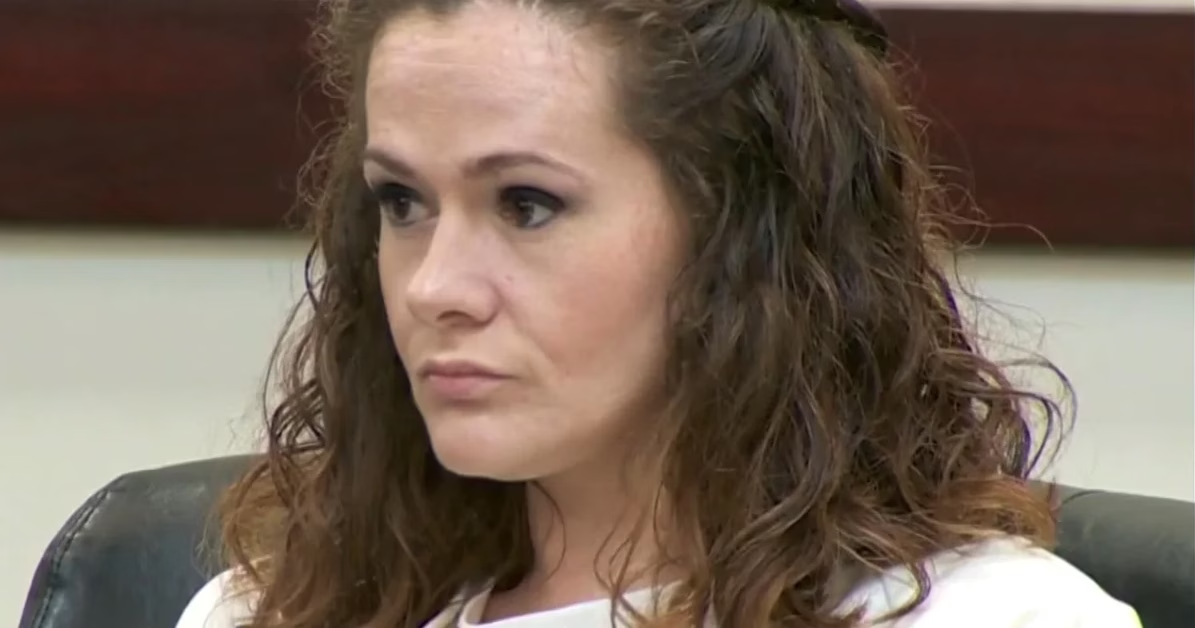
La candidata de Fuerza Popular tiene 50 años y es la heredera del polémico presidente Alberto Fujimori, a quien reivindica. Su lema electoral, por ejemplo, es «vuelve el orden».
English:
Right-wingers Keiko Fujimori and Rafael López Aliaga Lead Tight Race to Advance to Presidential Runoff
(LPL/BBC) – Last Sunday, Peruvians went to the polls to choose from a record field of 35 presidential candidates; as expected, early trends indicate that no candidate secured the 50% of the vote required to win outright in the first round.
With 73% of the votes tallied as of 8 p.m. local time this Monday, right-winger Keiko Fujimori leads with 16% of the total, followed closely by ultraconservative Rafael López Aliaga with 12%. In third place is centrist Jorge Nieto, with 11%.
However, the percentage gap between candidates is so narrow, and the vote so fragmented, that the final outcome remains entirely up in the air.
Amidst rising crime rates and a political crisis that has eroded public trust in institutions, election day was not without its problems.
Polls opened at 7 a.m. local time, though delays were reported in some areas—including the capital, where more than 63,000 people were unable to cast their ballots—according to Piero Corvetto, head of the National Office of Electoral Processes (ONPE), who spoke on Sunday.
According to Corvetto, the distribution of electoral materials was at fault; however, throughout the day, local media also reported delays in setting up polling stations and instances of citizens assigned to oversee the voting process failing to show up.
To address the issue, the ONPE announced that citizens affected by the shortage of electoral materials would be permitted to vote on Monday.
Approximately 27 million people were eligible to vote, both within Peru and abroad.
In addition to the president and vice president, members of the Chamber of Deputies and the Senate were also elected this Sunday.
Indeed, whoever emerges victorious will almost certainly face a divided Congress—a situation that could not only hinder the implementation of their political agenda but also jeopardize their very ability to remain in office.
The winner of the runoff election will become Peru’s ninth president in the span of just ten years. If the trend observed in the initial results is confirmed, the runoff election will be between two right-wing candidates.
The candidate from Fuerza Popular is 50 years old and is the political heir of the controversial President Alberto Fujimori, whom she champions. Her campaign slogan, for instance, is «Order Returns.»